Plantation Style Dining Room
What Is Plantation Style Interior Design?

Plantation homes were built during the Antebellum (pre-Civil War) era (1830 - 1860) and were prominent in the Southern states of America. The architectural features of French Revival and Greek Revival styles were prominent. Louisiana plantation homes often incorporated Spanish architectural features of ironwork for stairway and balcony railings. A handful of homes used Italianate and Gothic Revival ornate features.
Plantation Home Interior Feature Must-Haves
There were two main features found in most plantation homes: a large entrance hall and a parlor or drawing room.
Entrance Hall

The entrance hall was very important during this era since it was the reception area where guests were greeted. It also was used to make a statement of grandeur and wealth. More importantly, the entrance hall was part of the natural ventilation design of plantation homes since it helped to disperse trapped hot air into the next level of the home.
Typically, a sweeping curved staircase leading to the next level was located with the entrance hall. This was usually placed opposite the main double door entrance for visual effect. The staircase afford quite a bit of pomp and ceremony for various events held in the home. The owners could make grand entrances to the gatherings and parties they held or a bride could be guided down the sweeping staircase on the arm of her father for a truly elegant wedding procession.
If you're building a plantation home, then pay close attention to the entrance. Some of the elements you want to include in the foyer area:
- Curving staircase: Baluster railing or wrought iron (Louisiana influence).
- Chandelier: Crystal chandeliers were cherished and could be found in entrance halls and dining rooms. Also, wrought iron chandeliers were used many Louisiana style homes.
Create a Parlor or a Drawing Room

The parlor was a vital part of the plantation home and was located near the front door. This allowed privacy and comfort for receiving guests. In large plantation homes, there were two parlors. One was larger and called a drawing room. This is where formal entertaining occurred. It was also where the men retired after a formal dinner to smoke cigars and drink cognac.
The parlor was a smaller room and used by the family. It was where day visitors were received and the women retired after a formal dinner. In the parlor, they would sip hot tea or coffee and catch up on the latest gossip.
You can transform a room located in the front part of your home into a plantation parlor by including the following elements:
- Piano: Typically a baby grand piano or grand piano depending on room size was used.
- Settee: Most parlors were large enough to accommodate two settees.
- Needlepoint and tapestry footstools: These were of varying heights, but the most popular ones were only a few inches off the floor. French tapestries were popular for the walls and footstools.
- Sideboard and sterling silver tea set: Afternoon tea was observed and was the after dinner choice for most ladies.
- Card tables: Card playing was a common pastime. The tables had foldover solid leaf tops and some had a fifth leg that shifted in place underneath the second leaf. These could be very plain to elaborate with inlays.
Colors for Plantation Home Styles

The exterior of plantation homes was typically stucco that was white-washed, however, there were many homes made of brick. Because plantation owners were wealthy, their homes were quite large and were referred to as mansions.
Some popular color schemes used included
- Blue: Deep ocean blue or light Carolina sky blue
- Gray: Various hues of gray were often found in fabrics and were repeated with silverware and silver service trays, vases and bowls. Pewter, although considered a lesser metal, was also used.
- Green: Emerald green, forest green and pale green like that of lavender
- Pink: Deep rose or pale mauve
- Purple: Pale lavender or dark velvet purple
- Red: Poppy red or Chinese red
- Yellow: Mustard yellow or pale buttercup yellow
Furniture Styles
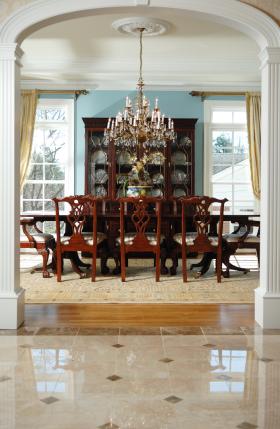
Many of the master cabinet makers of the 18th century remained popular throughout the era of plantations in the South and are still the deciding styles of classical furniture. Mahogany was a highly cherished wood used in furniture making.
Some of the popular furniture styles used in plantation homes included:
- Chippendale is very distinguishable for its main four styles that include carved English styles, ornate French Rococo found in Louis XV furniture styles, traditional Gothic with fret-worked legs and point-tipped arches, and Chinese depicting latticework, intricate inlay with a lacquer finish. Ball and claw legs very often used.
- Empire was inspired by the architecture found in the Roman empire. Napoleon influenced the Empire design. Various features included fluted columns, swan furniture arms and feet and Federal motifs.
- Hepplewhite was a cabinetmaker's style that was elegant with slender curves with straight legs. It was famous for using the shield shape for the backs of chairs. Inlays were often used as were paints or lacquer finishes.
- Queen Anne was considered one of the most elegant styles thanks to the use of the cabriole leg (arches and curved) in tables, chairs, dressers and other pieces of furniture. The curving movement can be seen repeated in wing-back chairs and dining chairs with upholstered seats.
Rice Bed a Must Have

You can't design a plantation home without having at least one Rice Bed. This design attributed to South Carolina is a tall four poster bed minus a canopy.
The posts are carved from cherry or mahogany wood with ornate carvings that depict either rice or tobacco. Similar styles add ambiance to the bedroom and help complete the home's design.
Fabric Choices
Damask was always the preferred fabric for upholstery, although others such as velvet, English Chintz and French tapestries were used. During the summer months, slipcovers made of white cotton duck canvas were fitted over the furniture to protect it from sweat and oil. Thick wool rugs were often replaced with cool sisal rugs and heavy draperies were replaced with breezy sheers.
Window Treatments
Silk damask was the most popular fabric used for draperies and curtains. Large and ornately carved cornices were used and often gilded with gold and served as a visual status symbol. Another popular style was valances comprised of luxurious folds fabric to top draperies or curtains.
An example of drapery treatment might be a red damask drapery with a lace overlay that was lined in either a yellow or green silk for a striking visual effect.
Wide wood shutters were used for privacy and cross-ventilation with the draperies open. These are referred to as "plantation shutters" and were great to block the afternoon summer sun while allowing ventilation within rooms.
Floor Treatments
Hardwood floors were the most common types of floors and were covered with expensive wool rugs, including thick hand-carved Aubusson rugs.
Many entrance halls featured prized Italian marble floors that continued up the winding staircase. Wooden inlay patterns along the perimeters of wood floors could be found in dining rooms, parlors and libraries, as well as forms of parquetry.
Two popular choices for hardwood were oak and a lesser choice, heart of pine, since both pine and oak trees were abundant on plantation land and easily harvested.
Finishing Touches
The finishing touches for your plantation home design should include various art and sculptures, both small and large. Antebellum dwellers loved the master artists and those who could afford the expense prided themselves in owning several original pieces.
In a modern design, you could display antique finds such as grass or pine needle woven baskets, china, silver and cut-glass bowls, trays, pitchers. Embroidered dollies graced side tables and buffets and needlepoint pillows were prized possessions that demonstrated the talents and abilities of the lady of the house.
© 2021 LoveToKnow Media. All rights reserved.
Source: https://interiordesign.lovetoknow.com/interior-design-styles/what-is-plantation-style-interior-design


Posting Komentar